
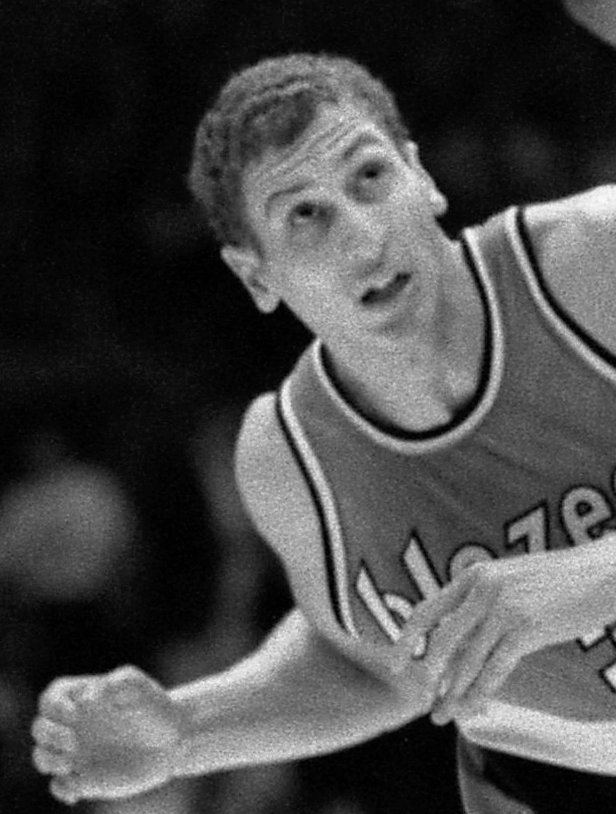
Say the name Sam Bowie to a basketball fan and you will get the same reaction every time: “the guy picked before Michael Jordan.” It is true, and it has followed him for more than 40 years. But it is not the whole story. Bowie was the best high school player in America, a Kentucky star, a ten-year NBA professional and a man who kept coming back from broken legs. He is 65 in 2026, living in Lexington, Kentucky, training harness racing horses.
Table of Contents
Sam Bowie at a Glance
Here are the key facts in one place.
- Full name: Samuel Paul Bowie
- Born: March 17, 1961, Lebanon, Pennsylvania, USA
- Sam Bowie age: 65 in November 2026
- Height and weight: 7 ft 1 in (2.16 m), 235 lb (107 kg)
- Position: Centre
- NBA career: 1984–1995, 511 games
- Teams: Portland Trail Blazers, New Jersey Nets, Los Angeles Lakers
- Career averages: 10.9 points, 7.5 rebounds, 1.8 blocks per game
- College: Kentucky, 1979–1984; jersey No. 31 retired in 2002
- Wife: Married twice; Stephanie Bowie since April 2018
- Children: Three, now grown
- Lives in: Lexington, Kentucky
- Now: Harness racing owner and trainer at The Red Mile
A Tall Kid from a Small Pennsylvania Town
Samuel Paul Bowie was born on March 17, 1961, in Lebanon, Pennsylvania. His father Ben, 6 ft 10 in, had played for the Harlem Magicians for six seasons. Bowie’s parents divorced when he was 12, and he later lived with his maternal grandmother until college. His father died suddenly while Bowie was at Kentucky, at just 45, when a cyst on his lung burst. “We loved each other more than two individuals could,” he said of his father. “But we never could say, ‘I love you.’ Neither of us was that kind of person. That’s the thing I’m most sorry about, that I didn’t get to tell him I loved him before he was gone.”
The Schoolboy Everyone Wanted
At Lebanon High School, Bowie was a sensation. Playing for coach Chick Hess, he averaged over 28 points and 18 rebounds a game. In his junior year he carried Lebanon to the state final, where they lost 51–50 to Schenley High School of Pittsburgh. It is a loss he still talks about decades later. “When I say this, I mean it with all my heart, from the Kentucky experience to all of my years in pro ball, when I reminisce I go back to my Lebanon Cedar days,” he said in 2018.
In 1979 he was named the national player of the year, ahead of another giant schoolboy centre, Ralph Sampson. He made the McDonald’s and Parade All-American teams, and Sports Illustrated featured him with Sampson and Steve Stipanovich as the three best high school centres in the country. What nobody saw at the time was that his legs were already giving him trouble. Old film from the late 1970s shows him favouring his legs, and he later said the trouble started back in high school.
Kentucky: Two Great Seasons, Two Lost Years
Bowie chose the University of Kentucky, playing for coach Joe B. Hall from 1979. His first season, 1979–80, was strong: 12.9 points and 8.1 rebounds a game as Kentucky went 29–6. His second season was better still: 17.4 points, 9.1 rebounds and 2.9 blocks a game, with nine blocked shots in one game against St. John’s — a Kentucky record he still shares.
Then came the injury that changed his life. Late in that sophomore season, against Vanderbilt, he went up for a dunk and landed badly on his left leg. He tried to play on, but X-rays later showed a stress fracture in his left tibia — he had been playing on a broken leg. Surgery cost him the whole 1981–82 season, and he spent 44 weeks in a cast. The bone had not healed right, so a bone graft wiped out the 1982–83 season as well. Out of eligibility by then, he needed a medical redshirt from the NCAA to play one final season.
In 1983–84 he played all 34 games, averaged 10.5 points and 9.2 rebounds, and was named a second-team All-American. He and Melvin Turpin formed the “Twin Towers” front line, and they led Kentucky to the SEC title and a 26–4 record, and to the Final Four in Seattle, where they lost 53–40 to Georgetown and Patrick Ewing. Across 96 games at Kentucky, he averaged 13.4 points, 8.8 rebounds and 2.3 blocks. The school retired his No. 31 jersey in 2002.
The Olympics He Never Got to Play
In the summer of 1980, Bowie was selected for the US Olympic basketball team, the youngest American national team ever assembled, with players like Isiah Thomas and Buck Williams. He was 19. The team never went to Moscow: after the Soviet invasion of Afghanistan, the United States and 66 other nations boycotted the 1980 Summer Olympics. Team USA instead played NBA all-star teams in the “Gold Medal Series” and went 5–1. Bowie was its second-leading scorer and top rebounder and shot-blocker. Years later, he was given one of the 461 Congressional Gold Medals created for the 1980 athletes.
Draft Night, 1984
The 1984 NBA draft is the most talked-about in league history, and Bowie sits at the heart of it. Houston won a coin toss with Portland for the first pick and chose Hakeem Olajuwon. Portland, still looking for a centre, chose Bowie second. The Chicago Bulls then chose Michael Jordan third.
Portland’s thinking was simple: the Blazers had been without a reliable big man since Bill Walton left in 1979, and they had drafted guard Clyde Drexler the year before, so another guard was the last thing they needed. A healthy Bowie looked like the answer at centre.
With hindsight, the pick looks terrible — Jordan became the greatest player of all time. ESPN later called it the worst draft pick in North American pro sports history, and Sports Illustrated called Bowie the biggest draft bust in NBA history. Both labels are really about Jordan, not Bowie. A player who lasts ten seasons in the NBA is no bust.
There is one more part to the story, and Bowie told it himself. In a 2012 ESPN film called Going Big, he admitted he had hidden how bad his legs were before the draft. When a doctor tapped his left shin with a mallet, Bowie said he felt nothing — when in truth he was in clear pain.
Portland: A Good Start, Then the Breaks
Bowie’s first NBA season was a good one. In 1984–85 he played 76 games for Portland, averaged 10.0 points and 8.6 rebounds, and made the NBA All-Rookie First Team. It did not last. In his second season, chasing a rebound against Milwaukee, he got tangled with teammate Jerome Kersey and landed awkwardly. His left tibia snapped, and he was carried off the court on a stretcher. He played 38 games that year.
In the fifth game of the next season, against Dallas, he went up for a jump hook and his legs folded under him. His right tibia broke. Surgeons put three screws in the bone; two failed, so three more went in. In October 1987, just walking during warm-ups before a pre-season game, Bowie felt sharp pain in his right leg — a hairline fracture of the right tibia. In March 1988, doctors took bone from his hip and fixed a metal plate with ten screws to his right shin for good.
He missed the whole 1987–88 season and the first 62 games of 1988–89. Over his last four seasons in Portland, he played 63 games out of a possible 328. He later said his biggest regret was rushing back after the second break.
New Jersey: The Comeback
In June 1989, Portland traded Bowie and a draft pick to the New Jersey Nets for Buck Williams. In New Jersey, for the first time in years, his body held together. His four seasons there were the best of his NBA life: 12.8 points and 8.2 rebounds a game, never missing more than 20 games in a season. The high point came right away. In 1989–90 he averaged 14.7 points and 10.1 rebounds — a double-double — over 68 games. In 1991–92 he averaged a career-best 15.0 points a game, and in 1992–93 he played a career-high 79 games.
“Every time I go off the court, I’m thankful I didn’t get hurt again,” he said. A 2013 Bleacher Report list ranked him the 17th greatest Nets player to that point.
The Lakers and the End
After the 1992–93 season, Bowie was traded to the Los Angeles Lakers for Benoit Benjamin. The leg trouble came back, and he managed only 92 games in two seasons, starting 17. Bowie retired after the 1994–95 season, at 34, to follow his passion for harness racing. His final NBA numbers: 511 games, 5,564 points, 3,845 rebounds, 909 blocks — averages of 10.9 points, 7.5 rebounds and 1.8 blocks a game.
He visits hospitals often and talks to children facing far worse. “I’ve seen 7-, 8-, 9-year-old kids who have had their legs amputated because of bone cancer or a car accident,” he has said. “That’s when it puts things into perspective. There’s a kid who wishes he had a leg to break.”
Horses, Family and a Quiet Life
Retirement took Bowie back to Lexington, Kentucky. He threw himself into harness racing, owning and training horses that run at The Red Mile. It became his second career. He also did colour commentary for Kentucky basketball. In Lexington, Bowie has said, people remember his college years more than the draft story.
He has been married twice and has three grown children. He married Stephanie Bowie in April 2018 in La Fortuna, Costa Rica, and has said he was lucky to be a full-time father once basketball was over. He is a keen golfer and works as a motivational speaker.
What Is Sam Bowie Worth?
Nobody knows Sam Bowie’s exact net worth, because he has never published his finances. The figure quoted most often is $3 million, from Celebrity Net Worth — a number first published around mid-2016 and repeated by other biography sites ever since. A few weaker sites give $13 million with no source at all, and that figure should not be trusted.
One solid number exists. Basketball-Reference records that Bowie earned at least $16,735,000 in NBA salary across his career, including $3,200,000 in his last season, 1994. Salary is not net worth, but it gives a real sense of scale. Net worth is what a person owns minus what they owe. It is not a pay cheque, and it is not cash in the bank.
Sam Bowie in 2026
In 2026, Sam Bowie is 65 — he turned 65 on March 17, 2026. He lives in Lexington, Kentucky, working with harness racing horses at The Red Mile, and he still shows up at Kentucky basketball events. The draft question still finds him wherever he goes. “I’m a Christian and I’ve always felt that tomorrow is predetermined and that you will never be put through more than you can handle,” he has said. “I’ve had my share of surgery and broken bones, but these things were meant to be.”
Frequently Asked Questions About Sam Bowie
1. Who is Sam Bowie?
Sam Bowie is a former American basketball player, born March 17, 1961, in Lebanon, Pennsylvania. The 7-foot-1 centre played ten NBA seasons for Portland, New Jersey and the Los Angeles Lakers. He is famous for being drafted second in 1984, one spot ahead of Michael Jordan.
2. How old is Sam Bowie in 2026?
He is 65 years old. He was born on March 17, 1961, and turned 65 in March 2026.
3. Why did Portland pick Sam Bowie instead of Michael Jordan?
Portland needed a centre — they had not had a strong big man since Bill Walton left in 1979 — and they already had guards Clyde Drexler and Jim Paxson. Houston took Hakeem Olajuwon first, Portland took Bowie second, and Chicago took Jordan third.
4. What happened to Sam Bowie’s legs?
His legs troubled him from high school onward. At Kentucky, a stress fracture in his left tibia cost him two full seasons. In the NBA he broke his left tibia in 1985–86 and his right tibia in 1986–87, then needed a metal plate and ten screws in his right shin in 1988. He played only 63 of a possible 328 games in his last four Portland seasons.
5. What were Sam Bowie’s best stats?
Over 511 NBA games he averaged 10.9 points, 7.5 rebounds and 1.8 blocks. His best season was 1989–90 with New Jersey: 14.7 points and 10.1 rebounds a game. At Kentucky he averaged 13.4 points and 8.8 rebounds over 96 games.
6. Who is Sam Bowie married to?
Bowie has been married twice and has three grown children. He married Stephanie Bowie in April 2018 in La Fortuna, Costa Rica, and keeps his family life out of the spotlight.
7. What is Sam Bowie’s net worth?
There is no confirmed figure. Celebrity Net Worth estimates $3 million, a figure first published around mid-2016. Basketball-Reference records career NBA earnings of at least $16,735,000. Both are third-party figures, not verified financial statements.
8. What does Sam Bowie do now?
He lives in Lexington, owning and training harness racing horses that run at The Red Mile. He has also done colour commentary for Kentucky basketball and works as a motivational speaker.
9. Did Sam Bowie play in the Olympics?
He was chosen for the 1980 US Olympic team at 19, but the team never played in Moscow because the United States boycotted the Games. He played in the “Gold Medal Series” against NBA all-stars instead and later received a Congressional Gold Medal made for the 1980 athletes.
10. Was Sam Bowie a draft bust?
ESPN called it the worst draft pick in North American pro sports history, and Sports Illustrated called him the biggest draft bust in NBA history — but both verdicts rest on Jordan going third. Bowie played ten NBA seasons and averaged a double-double in his best year, so the tag is unfair to his career.
Closing Thoughts on Sam Bowie
Sam Bowie will always be introduced as the man picked before Michael Jordan, and that is a hard label to carry. But labels hide the real person. He was a schoolboy star, a Kentucky hero who lost two years to injury and fought back to the Final Four, a professional who rebuilt his career in New Jersey, and a man who found peace with horses in Lexington. His legs broke again and again, and he kept standing up.
Sources: Wikipedia — Sam Bowie; Basketball-Reference — Sam Bowie Stats; Land of Basketball — Sam Bowie NBA Profile. Photo: Lori Shepler, Los Angeles Times, CC BY 4.0, via Wikimedia Commons (commons.wikimedia.org/wiki/File:Sam_Bowie_during_1985_NBA_Playoffs.jpg).

Cristiana Harrison is a writer and editor at Today Time, where she covers education, lifestyle, health and more. She loves turning complex topics into clear, practical guides for everyday readers.