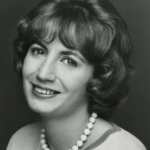
If you watched old Hollywood films, you have seen Sam Jaffe: the water carrier in Gunga Din, the old servant in Ben-Hur, the professor in The Day the Earth Stood Still, the criminal boss in The Asphalt Jungle. On 1960s television he was Dr. Zorba on Ben Casey. Before any of that, he was a maths teacher in the Bronx. He was 93 when he died in 1984, after acting for nearly 70 years.
Table of Contents
Sam Jaffe at a Glance
Full name: Shalom Jaffe
Born: March 10, 1891, in New York City, USA
Died: March 24, 1984, in Beverly Hills, California, aged 93
Work: Actor, teacher, musician and engineer
Best known for: Gunga Din (1939); The Asphalt Jungle (1950); The Day the Earth Stood Still (1951); Ben-Hur (1959); Dr. David Zorba on Ben Casey (1961–1965)
Awards: Volpi Cup for Best Actor at Venice (1950); Oscar nomination for Best Supporting Actor (1951); Emmy nomination (1962)
Sam Jaffe was an American character actor who worked on stage, in films and on television for almost seven decades. Born Shalom Jaffe in New York in 1891, the youngest child of Ukrainian Jewish immigrants, he studied engineering, taught mathematics, and then gave it all up for the theatre at 24.
He was no handsome leading man: short, with curly hair and a lined face, he was cast in parts that needed brains and character — holy men, professors, doctors, criminals. He made his first film at 43 and did his best work after 45. Blacklisted in the 1950s, he lost seven years of screen work, then came back at 70 to become a television star.
Growing Up on Orchard Street
Jaffe was born at 97 Orchard Street on the Lower East Side of Manhattan, a building that today holds the Lower East Side Tenement Museum. His father, Barnett Jaffe, was a jeweller from Ukraine. His mother, Heida, had been a Yiddish actress in Odesa, and in America she became a well-known stage actress and vaudeville performer.
The youngest of four children — older brother Abraham, older sisters Sophie and Annie — he went on stage with his mother in Yiddish theatre productions as a small boy. School came easily to him: Townsend Harris High School, then engineering at the City College of New York, where he graduated in 1912, followed by graduate work at Columbia University.
Most sources give his birth date as March 10, 1891, the date used here; the Jewish Virtual Library gives March 8, and Wikidata also lists March 10, 1893, a date with no support in the main biographies.
From the Classroom to the Stage
After university, Jaffe became a teacher of mathematics at the Bronx Cultural Institute, a college preparatory school, and rose to become its dean of mathematics. It was a solid, respectable career, and he could have stayed in it for life.
He did not. In 1915, at 24, he left teaching and joined the Washington Square Players, a New York theatre company, and three years later he made his Broadway debut in Youth. Over the next 60 years he appeared in 21 Broadway plays, the last in 1979, when he was 88.
In 1923 he played Reb Ali in the Broadway premiere of Sholem Asch’s God of Vengeance, a production that made headlines when its cast was charged with indecency. He appeared in Grand Hotel (1930), The Eternal Road (1937), A Doll’s House (1937), Cafe Crown (1942) and Mademoiselle Colombe (1954).
His biography also credits him with helping to set up the Equity Library Theatre, which gave stage parts to hundreds of performers. In Greenwich Village he lived in the same building as a young John Huston, and the two stayed close friends for life. His friends also included Edward G. Robinson, Zero Mostel, Ray Bradbury and Igor Stravinsky.
First Films: A Mad Tsar and a High Lama
Jaffe was 43 when Hollywood called. His first film was The Scarlet Empress (1934), directed by Josef von Sternberg and starring Marlene Dietrich, in which he played the mad Tsar Peter III — a wild, frightening performance that put him on the map at once.
In 1937 Frank Capra gave him the part of the High Lama in Lost Horizon, the old holy man of Shangri-La, a last-minute choice after the actor first cast had died. The film was a success, and the High Lama became one of the roles people remembered him for — a calm old man with a secret.
Gunga Din
Two years later came the part that made him famous. In George Stevens’s Gunga Din (1939), Cary Grant, Victor McLaglen and Douglas Fairbanks Jr. played three British soldiers in India, and Jaffe, at 47, played the title role: Gunga Din, the regimental water carrier who longs to be a soldier.
The casting was bold — a New York stage actor given the lead part of an Indian bhisti — but he played it with such warmth and dignity that the film became a huge hit. In the final scene he sounds the bugle to warn the regiment of an ambush and dies a hero, and Kipling’s line — “You’re a better man than I am, Gunga Din” — is still quoted today.
After Gunga Din, Jaffe made no film for eight years. He went back to Broadway, and it was 1947 before he returned to the screen, in Elia Kazan’s Gentleman’s Agreement, playing a professor much like Albert Einstein. More professor and doctor parts followed, and then, in 1950, John Huston handed him the best part of his life.
The Oscar Nomination
In The Asphalt Jungle (1950), Jaffe played Erwin “Doc” Riedenschneider, a criminal mastermind just out of prison who plans a jewel robbery in exact detail — clever, patient and doomed, played with a quiet, coiled power that carries the film.
The part won him the Volpi Cup for Best Actor at Venice in 1950, and in 1951 he was nominated for the Academy Award for Best Supporting Actor. George Sanders won the Oscar that year for All About Eve, but the nomination at 59 was the peak of Jaffe’s film career, and the film is still counted among the great crime films.
Professor Barnhardt and the Blacklist
Jaffe made three films in 1951. One was The Day the Earth Stood Still, directed by Robert Wise, in which he played Professor Jacob Barnhardt, the scientist who alone grasps what the alien Klaatu, played by Michael Rennie, is trying to say. Barnhardt has only a few scenes, but he is the heart of the film: the man who listens.
Fittingly, Jaffe the trained mathematician is said to have worked out the equations on Barnhardt’s blackboard himself.
The same year, his career was cut short. His name turned up in Red Channels, a pamphlet naming performers said to be sympathetic to communism. No evidence was shown and no hearing was held, but the studios stopped calling, and for about seven years, from 1951 to 1958, he did not appear on screen at all. He worked on stage instead and waited.
The men who brought him back were directors who knew his worth. Wise had already cast him in The Day the Earth Stood Still, backed by producer Julian Blaustein and studio chief Darryl F. Zanuck. In 1958 his friend John Huston cast him in The Barbarian and the Geisha, with John Wayne, and then William Wyler gave him the part of Simonides, the faithful old servant, in Ben-Hur (1959). Ben-Hur won 11 Academy Awards, the most of any film at the time, and Jaffe, at 68, was working in big films again.
Simonides in Ben-Hur
Ben-Hur was the biggest film of its day, a huge Roman epic starring Charlton Heston, and Jaffe’s part was small but memorable: Simonides, the old servant of the Hur family, loyal through years of slavery and separation, played with the same quiet dignity he had brought to Gunga Din twenty years earlier. The film closed the blacklist chapter of his life, and he stayed busy for the rest of his career, mostly on television.
Television Fame as Dr. Zorba
In 1961, at 70, Jaffe took the part a whole new audience would know him by: Dr. David Zorba, chief of neurosurgery on the ABC medical drama Ben Casey, the old, steady doctor who guided the fiery young Dr. Casey, played by Vince Edwards.
Zorba was the calm centre of the show, a man who had seen it all and kept his head when everyone else lost theirs. Jaffe played him for four seasons, from 1961 to 1965, and in 1962 he was nominated for a Primetime Emmy Award. His wife Bettye Ackerman was on the show too, playing Dr. Maggie Graham.
For millions of viewers who had never seen Gunga Din or The Asphalt Jungle, Sam Jaffe was Dr. Zorba — a 70-year-old man playing a man of 70, with a lifetime of work behind every line.
Marriage and Family
Jaffe married twice and had no children.
His first wife was Lillian Taiz, an operatic soprano and musical comedy star. They were married in 1926, and she died of cancer in 1941, after 15 years together.
Fifteen years later, in 1956, he married the actress Bettye Ackerman — he was 65, she was 32 — and they stayed together until his death in 1984, 28 years. Ackerman, who had acted beside him on Ben Casey, later died on November 20, 2006.
He had no children from either marriage. His family, in the end, was his work and his wide circle of friends, including his biographer Arleen Lorrance, who based her book Sam Jaffe on 150 interviews.
What He Was Worth
There is no confirmed figure for Sam Jaffe’s wealth. He died in 1984, before the age of net worth websites, and he never spoke about his money in public.
Celebrity Net Worth estimates his net worth at $4 million at the time of his death, after adjusting for inflation — the best-known figure, and the only one from a major source. A smaller site gives $18 million, with no source behind it, and another gives $10–20 million, but that number belongs to a different Sam Jaffe, a film producer born in 1965. All of these numbers are third-party estimates, not facts.
The truth is simpler: Jaffe was a character actor and a stage actor, not a star with a huge salary. He worked steadily for seven decades, and steady work was his wealth. In 1978 he received the Paul Robeson Award, given for art and service to the community.
His Last Roles
After Ben Casey, Jaffe kept acting through the 1960s and 1970s: The Defenders, Tarzan, Mr. Zoltan Zorba on Batman, the miniseries QB VII (1974), a retired doctor murdered in the Columbo episode “Forgotten Lady” (1975), and the television film Gideon’s Trumpet (1980).
On film he played the Bookman in Disney’s Bedknobs and Broomsticks (1971) and appeared in The Tell-Tale Heart the same year. His final films, Nothing Lasts Forever and On the Line, both came out in 1984, the year he died.
He died of cancer at his home in Beverly Hills on March 24, 1984, two weeks after his 93rd birthday, and is buried at Eden Memorial Park. He had acted for 69 years, from a Yiddish stage as a boy to a film set at 92.
Frequently Asked Questions About Sam Jaffe
1. Who was Sam Jaffe?
He was an American actor born Shalom Jaffe in New York City in 1891. He played Gunga Din in 1939, Doc Riedenschneider in The Asphalt Jungle, Professor Barnhardt in The Day the Earth Stood Still, Simonides in Ben-Hur, and Dr. David Zorba on the television series Ben Casey.
2. How old was Sam Jaffe when he died?
He was 93 years old. He was born on March 10, 1891, and died of cancer at home in Beverly Hills on March 24, 1984.
3. What is Sam Jaffe best known for?
On film, for the title role in Gunga Din (1939) and for Doc Riedenschneider in The Asphalt Jungle (1950), which brought him an Oscar nomination. On television, for Dr. David Zorba on Ben Casey, which ran from 1961 to 1965.
4. Did Sam Jaffe win an Oscar?
No, he was nominated but did not win. He was nominated for Best Supporting Actor in 1951 for The Asphalt Jungle. He did win the Volpi Cup for Best Actor at the Venice Film Festival in 1950 for the same role.
5. Why did Sam Jaffe stop making films in the 1950s?
His name appeared in Red Channels, a pamphlet that listed entertainers said to be sympathetic to communism. The studios stopped hiring him, and he made no films for about seven years. He returned to the stage, and directors Robert Wise, John Huston and William Wyler later cast him again.
6. Who was Sam Jaffe’s wife?
He was married twice: first to the soprano Lillian Taiz, from 1926 until she died of cancer in 1941, then to the actress Bettye Ackerman, from 1956 until his death in 1984. Ackerman also appeared on Ben Casey with him.
7. Did Sam Jaffe have any children?
No, he had no children from either marriage.
8. What was Sam Jaffe’s net worth?
No confirmed figure exists. Celebrity Net Worth puts it at $4 million at the time of his death, after adjusting for inflation. Other sites claim $18 million or $10–20 million, but the $10–20 million figure is about a different person, a producer born in 1965. These are estimates, not verified facts.
9. What did Sam Jaffe do before he became an actor?
He taught mathematics. He graduated in engineering from the City College of New York in 1912, did graduate work at Columbia, and worked as a teacher and then dean of mathematics at the Bronx Cultural Institute before joining the Washington Square Players in 1915.
10. How did Sam Jaffe die?
He died of cancer at his home in Beverly Hills, California, on March 24, 1984, at the age of 93. His last two films, Nothing Lasts Forever and On the Line, were released in the same year.
Closing Thoughts on Sam Jaffe
Sam Jaffe lived three lives in one: a maths teacher from the Lower East Side, a Broadway actor for 60 years, and a film and television actor whose face became familiar to millions. He played water carriers and holy men, criminals and professors, and made them all feel true. The blacklist stole seven years from him in his sixties, and he answered it by coming back at 70 and playing the most trusted doctor on American television. He worked until the year he died, at 93.
Cristiana Harrison is a writer and editor at Today Time, where she covers education, lifestyle, health and more. She loves turning complex topics into clear, practical guides for everyday readers.